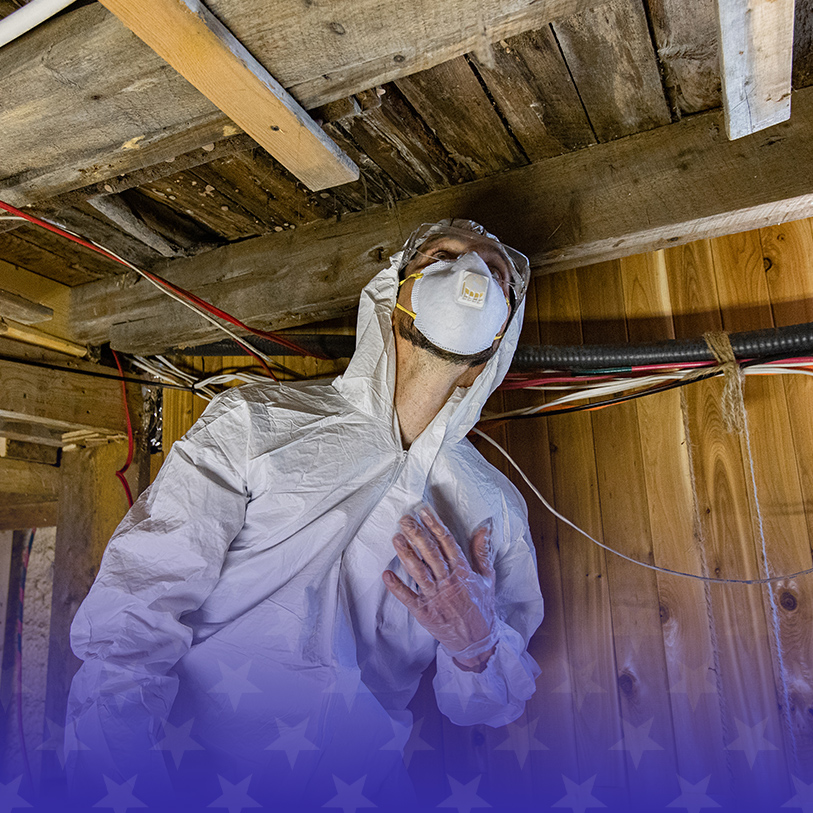
Eagle Industrial Hygiene offers Asbestos Program Management for various
commercial and municipal properties, as well as institutional facilities and
schools. Eagle will act as your Asbestos Coordinator or Designated Person, taking
over all responsibilities under AHERA and OSHA regulations. We provide the
following services:
Emergency Response Coordination
When an asbestos- related emergency occurs at your facility (i.e. pipe burst,
insulation tears, or other physical damage) our office will dispatch a licensed
and trained representative to assess the damage and immediately implement all of
the corrective actions necessary to ensure the safety of all building occupants.
All response actions are followed-up with comprehensive written reports, providing
you with proper and required legal documentation.
Asbestos Abatement Project Administration
Eagle acts as the project manager during any of your facility's asbestos abatement
including all pre-planning verification, preparation of written plans and
specifications, and project oversight of the abatement from initial implementation
to conclusion.
Air Monitoring And Laboratory Analysis
During the abatement project, our licensed industrial hygiene technicians conduct
all required air monitoring and analysis, including sampling prior to, during, and
following abatement projects. The samples are either analyzed in our AIHA-accredited
laboratory or on-site, utilizing optical microscopy protocols. The analytical
results are provided in a timely manner in a format tailored to the individual
clients requirements.
Training And Fit Testing
Eagle offers programs for OSHA and EPA mandated asbestos training to your
personnel. The training can either be conducted in-house at your location, or at
our facility. We can also provide fit testing of respiratory and safety equipment
to your employees in compliance with federal regulations.
Bid Procurement and Liaison Services
Prior to the start of an abatement project, we screen potential bidders until
we find a qualified remediation company that meets the needs of your project.
Acting as your agent, we represent your interests in all phases of the abatement
project, coordinating multiple contractors, and serving as a liaison between your
company and all involved regulatory agencies.
With the influx of increasingly complex and stringent regulations, many
businesses, organizations, and schools find it more cost-effective to have a
consultant implement their asbestos program, rather than engage in the expense
of finding and hiring a qualified full-time employee or adding to the
responsibilities of an already over-burdened manager.
ASBESTOS FREQUENTLY ASKED QUESTIONS
What is asbestos?
Raw Asbestos Rock Image
Asbestos is a naturally occurring mineral found all over the world. It is unique because it takes the form of long, thin fibers. It is fire resistant and a poor heat and electricity conductor, which makes it useful in many different applications.
Are there different types of asbestos?
There are two groups of asbestos: serpentines and amphiboles. Serpentines have a layered crystalline structure, and amphiboles have a chain-like crystalline structure. Most of the asbestos found in buildings is serpentine. One such serpentine is chrysotile. Chrysotile is white or silver, shiny, slippery, and curled. There are five amphibole asbestos types: amosite, crocidolite, tremolite, actinolite, and anthophyllite. Amphiboles are shiny, splintered, needle-like fibers in shades of brown, white, silver, gold, green, or blue.
What does "Friable Asbestos Containing Material" mean?
A friable asbestos containing material is a material that contains more than 1% asbestos and can be crumbled or reduced to powder by hand when it is dry. Friable materials may release more asbestos fibers into the air than non-friable materials.
When does asbestos become hazardous?
Materials containing asbestos are hazardous when they are damaged or broken and are releasing asbestos fibers into the air. If the fibers are breathed in they can enter the lungs and cause health problems.
Is one type of asbestos more hazardous than the other types?
Amosite asbestos, one of the chain-type structures is considered more hazardous than chrysotile asbestos. Amosite asbestos is commonly found in older industrial thermal insulations, such as boilers and piping.
What kind of health problems does asbestos cause?
Long term exposure to airborne asbestos fibers increases the risk for cancer and other lung diseases such as asbestosis. Workers who handle asbestos everyday are at the greatest risk. Respiratory protection and other protection measures can help reduce exposure to asbestos.
What types of items usually contain asbestos?
Asbestos was used in hundreds of different materials. It is common in fire-resistant coverings, concrete products, insulation, plasters, floor tiles and other building materials.
How do you know if something contains asbestos?
You can not always tell if a material contains asbestos just by looking at it. The only sure way to know is to have a sample of the material analyzed by a laboratory.
What is asbestos abatement?
Abatement means any removal, enclosure, repair, or maintenance to an asbestos containing material to protect the environment or human health.
What governmental agencies regulate asbestos abatement?
Workers are protected with laws from the Occupational Safety and Health Administration (OSHA). The Environmental Protection Agency (EPA) has laws regarding asbestos containing products, asbestos removal, and environmental protection. Individual states, including Pennsylvania, also have laws regarding asbestos.
Is there a law that regulates asbestos in schools?
Yes, the Asbestos Hazard Emergency Response Act (AHERA) was passed by Congress in 1986 to require that schools control hazardous asbestos.
Do workers need special training for working with asbestos?
Yes, Pennsylvania law requires that all persons who work in any asbestos occupation must have a certification from the State. This certification is received by taking a training class and passing a written test. The certification must be updated with renewal training courses.
How are non-work areas separated from the work area?
Work areas are separated from the rest of the building by partition walls and locking doors. Containment barriers, made of heavy plastic sheeting and/or plywood are set up around the individual work area during asbestos removal.
How do we know what work areas contain asbestos?
Work areas that contain asbestos are clearly labeled at all entrances. The signs will state that asbestos is present and only authorized persons wearing proper protection are permitted to enter.
How is the asbestos removed?
Removal techniques vary with the type of material being removed. Generally, asbestos is wetted during removal to keep fibers from escaping to the air. Asbestos containing materials may be cut, peeled, or scraped off. HEPA vacuums may be used to remove asbestos fibers on the surface of materials. Air filtering equipment and special ventilation is used. Asbestos containing materials are placed into bags or containers that are labeled as containing asbestos. Removal of asbestos must be conducted under a controlled environment to protect the health of the workers and building occupants.
What is a HEPA vacuum?
High Efficiency Particulate Aerosol (HEPA) filtered vacuums are vacuums that have special filters which can trap very small particles, like asbestos. They are often used to clean work areas during and after asbestos removal. They trap asbestos fibers more efficiently than a regular vacuum can. HEPA filters are also used in air cleaners to remove asbestos and other contaminants from the air.
How is the asbestos kept from leaving the work area?
Plastic sheet barriers are erected around the asbestos work area and are sealed to the ceiling, walls, and floor to prevent asbestos from leaving the work area. All doors, windows, and other openings are sealed. HEPA filtered ventilation machines are used to keep the air in the work area from escaping to the non-work area. The ventilation units exhaust air through the filters to create a negative pressure inside the work area. These machines cause air to flow only into the work area, not out. Air filters are used to remove asbestos fibers from the air. Workers shower and remove work clothing before entering non-work areas. Clothing is put into a bag or container. Work tools and containers containing asbestos materials or work clothes are cleaned prior to being removed from the work areas.
Where do the workers shower and where does the shower water go?
Workers shower in a specially built shower and changing area that is called the decontamination area. This area is between the asbestos work area and the non-work areas. All water from the shower is collected for treatment.
Where does the air removed from the work area go?
Air is exhausted outside. This air is filtered before it is exhausted to keep asbestos and other contaminants from leaving the work area.
Will furniture or other items be contaminated during work?
If there is any furniture or other removable items in the work area they will be removed prior to any asbestos work. If there are items that can not be removed they will be completely covered with plastic to prevent any contamination. After the work is completed they will be cleaned.
Will asbestos get into the ventilation system?
Any vents or other openings in the ventilation system in the work area will be sealed with plastic to prevent asbestos from entering the system. If possible, the ventilation system in these areas will be shut down.
What happens if the containment plastic tears?
Tears or other damage to the containment will be corrected immediately. The use of negative air machines keeps air flowing into the work area, even if there is a tear in the containment. Since air is flowing into the work area asbestos fibers are prevented from leaking out into the non-work area.
How is the work area cleaned after the asbestos is removed?
All the non-asbestos surfaces (floors, walls, ceiling, and non-movable objects) will be protected during work with plastic sheets. After the work is completed the plastic will be removed and the surfaces will be cleaned with a HEPA vacuum then washed to remove any dust that might have gone through the plastic.
Will testing be done to measure the asbestos concentration in the non-work area?
Yes, air testing will be conducted to measure the asbestos concentration in the non-work areas. These tests are used to confirm that the protection measures taken are effective.
Why do the workers wear respirators and protective clothing?
Workers wear respirators and protective clothing to protect them from the asbestos fibers inside the work area. Persons outside the work area do not need respirators because the containment barriers prevent asbestos from leaving the work area. Protective clothing is removed by the workers before entering non-work areas to prevent taking any asbestos fibers out of the work area.
Are tests done to make sure all the asbestos is removed before a room is reoccupied?
Yes, after the asbestos removal and final cleaning tests will be done to check for asbestos contamination before non-workers will be permitted to go into work areas.
Where does the removed asbestos waste go?
Asbestos containing materials are removed from the work area in labeled bags or containers and are disposed of in a landfill that accepts such wastes.
Will asbestos waste be removed right away or will it be stored at the building?
Asbestos waste is not stored inside the building. The waste is stored during the job in an outdoor waste dumpster, which is kept sealed and locked at all times.
CONSTRUCTION ACTIVITIES FREQUENTLY ASKED QUESTIONS
Will dust, chemicals, and other contaminants be released during the asbestos work?
Any dust or other contaminants produced during the removal (from such items as adhesive remover) will be kept in the work area by the containment barriers. Special ventilation systems will be used during the work to keep these contaminants from entering non-work areas.
Will dust, chemicals, and other contaminants be released during the construction work?
Testing will be conducted to check for dust, chemicals, and other hazardous materials outside the work area during construction activities. Control of construction dust and chemicals will be controlled in much the same way as asbestos dust is controlled during the asbestos removal phase of the work.
Will there be a lot of noise created during the work?
All construction work creates some noise. The partition barriers will help dampen noise created during the work. Noise levels will be monitored inside and outside the work area during construction activities.
What areas of the building will workers have access to?
Workers will have separate entrances and exits into the school. Work areas will be clearly separated and marked from non-work areas through use of partition walls. All workers will remain in the work areas.
Where will construction equipment be stored?
Construction equipment will be stored in construction areas inside the building and in special job trailers outside the building.
Who will supervise all environmental monitoring during the asbestos removal and construction phases of the project?
A Certified Industrial Hygienist (CIH) will be responsible for the performance and evaluation of all testing and control measures.